
Brick, block and stone: pointing, sealing, keeping the water out

Mortar is meant to wear out. Brick is not.

Mortar joints are the sacrificial part of a brick wall: softer than the brick, they take the weather so the brick does not. When they crumble, water gets behind the wall, freezes, and the brick starts to spall. We cut out failed joints and repoint them with mortar matched to the original, replace damaged brick, and waterproof the wall, the foundation and every joint where water gets in.

  • Since 199035+ years on NJ masonry
  • MatchedMortar colour, strength and joint profile
  • BreathableSealers that let the wall dry
  • Insured & bondedScaffold and lift work included
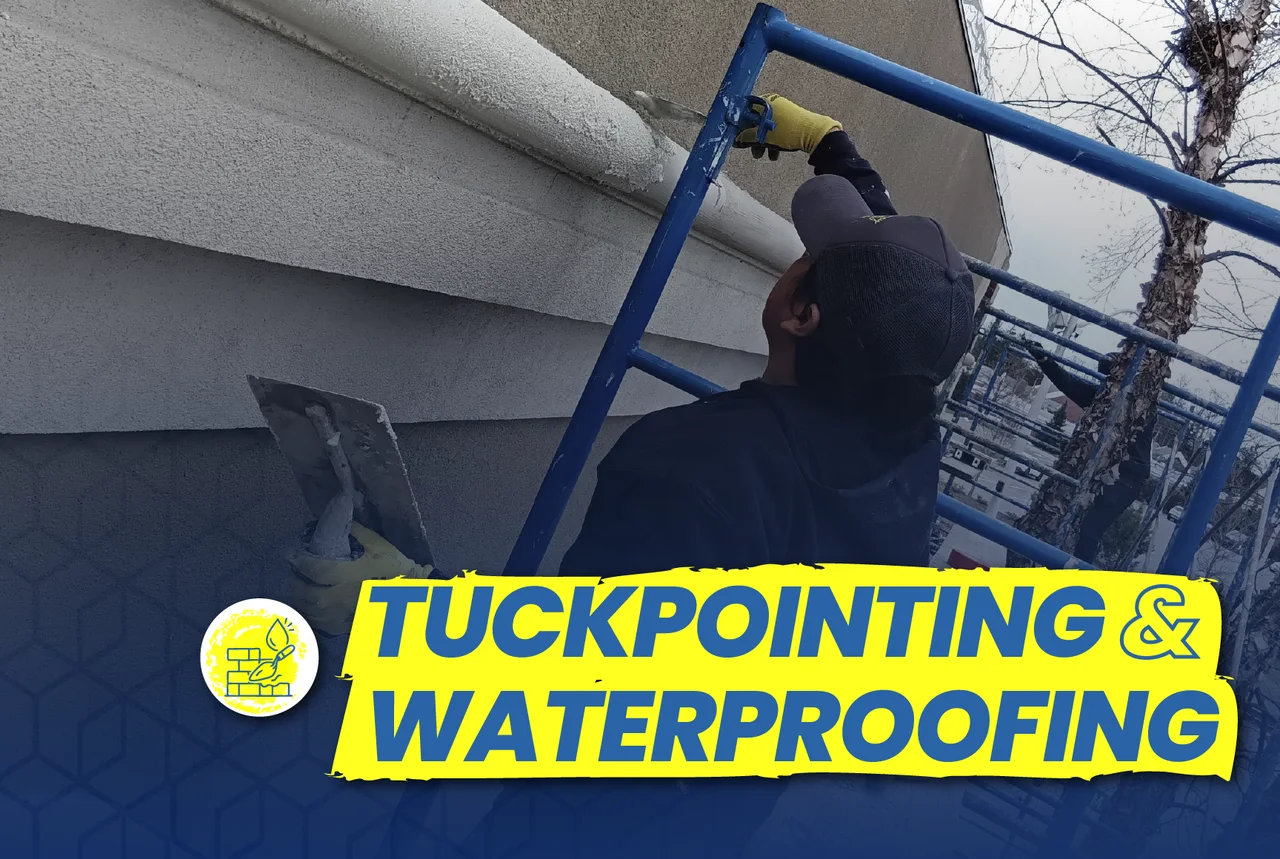
Tuckpointing & Waterproofing: Roof4Roof video cover showing a mason on scaffolding finishing a stucco band
Watch: tuck-pointing, masonry repair and exterior waterproofing on New Jersey brick, stone and block walls (2 min)
  • Early damage identification
  • Pre-application surface preparation
  • Mesh reinforcement integration
  • Multi-layer membrane seal
Signs

What the symptom usually means, and what we do about it

Brick walls tell you what is wrong if you know how to read them. Six things we see most on New Jersey masonry.

01

Crumbling, recessed or missing mortar

Usually: age. Mortar is designed to wear before the brick, and after 25 to 50 years it has.

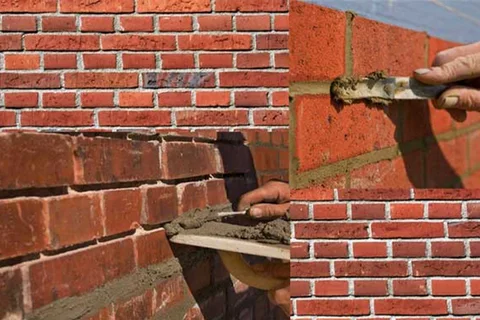
We do: grind out to a sound depth, repoint with matched mortar, tool to the original joint. The classic tuck pointing job.
02

Spalling brick: faces popping off

Usually: water in the brick freezing and expanding, often because hard modern mortar or a non-breathable sealer trapped it.

We do: replace the spalled brick with matched units, repoint with the right mortar, and seal with a breathable product only.

03

White powder on the wall (efflorescence)

Usually: water moving through the wall and leaving salts behind as it evaporates; the wall is wet inside.

We do: find where the water enters, fix it, clean the salts, and let the wall dry before any sealer.

04

Step cracks, bowing, loose units

Usually: settlement, a failed lintel, rusting steel, or a parapet that has moved.

We do: stabilize, replace lintels and ties where needed, rebuild the affected section, then point and seal.

05

Water inside at a window, chimney or parapet

Usually: failed sealant at the frame, a missing or rusted through-wall flashing, a cracked cap or coping.

We do: re-caulk, re-flash and re-cap. Pointing alone does not fix a flashing problem.

06

Damp basement walls, water at the slab

Usually: grading and gutters pushing water at the foundation, and a foundation wall that was never waterproofed.

We do: fix drainage first, then parge, coat and seal the foundation from outside where possible, inside where not.

  • Brick tuck pointing for aging mortar joints
  • Repair and replacement of damaged brick
  • Waterproofing exterior brick, block and stone surfaces
  • Sealing cracks and joints to prevent water infiltration
  • Foundation protection and moisture barrier installation
  • Repairing and sealing basement walls
  • Gutter and drainage improvements to keep water off the wall
  • Restoration of damaged brick structures
  • Chimney repointing, caps and crowns
  • Parapet, coping and lintel repairs
Brick, block, stone

The mortar has to match the wall, not the bag

The most common mistake in New Jersey repointing is hard Portland mortar in a soft old wall. It does not move, so the brick does. These are the walls we point and how.

Pre-war brick soft, lime-based mortar

What: row houses, brownstones and factories built before the 1930s with soft brick and lime mortar.

How: Type O or lime mortar, never Type S; joints tooled to match; brick replaced with reclaimed or matched units.

Repoint every 50–75 yr

Modern brick veneer post-war homes

What: a single wythe of brick over a wood or block wall, with weep holes and through-wall flashing that often never existed.

How: Type N mortar, weep holes opened or added, flashing at lintels and sills, sealant at the frames.

Repoint every 25–40 yr

Concrete block garages, foundations, commercial

What: CMU walls that crack at the joints and wick water.

How: Type S mortar, crack repair, parging or elastomeric coating, and proper waterproofing below grade.

Coat every 10–15 yr

Stone brownstone, fieldstone, limestone, bluestone

What: stone foundations, steps, sills and facades, often with mortar harder than the stone.

How: lime-based mortar, stone consolidation where it is flaking, patching with matched repair mortar, caps and sills re-set.

Repoint every 40–75 yr

Chimneys and parapets the most exposed masonry

What: brick that gets wet from every side and freezes first.

How: repoint, rebuild the top courses where needed, new crown or coping, through-wall flashing and counterflashing, breathable sealer.

Check yearly

Steps, stoops and retaining walls ground contact

What: masonry that sits in water and salt all winter.

How: repoint and re-set loose units, replace broken treads and caps, seal, and fix the drainage that is undermining them.

Seal every 3–5 yr
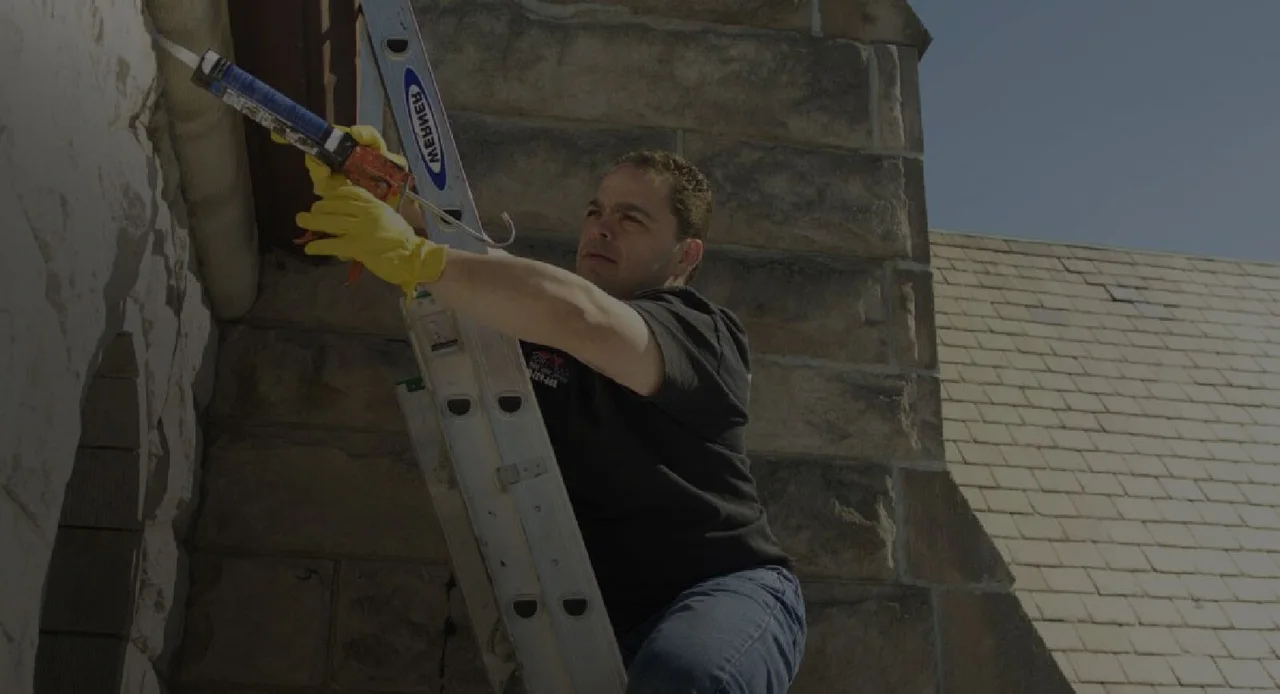
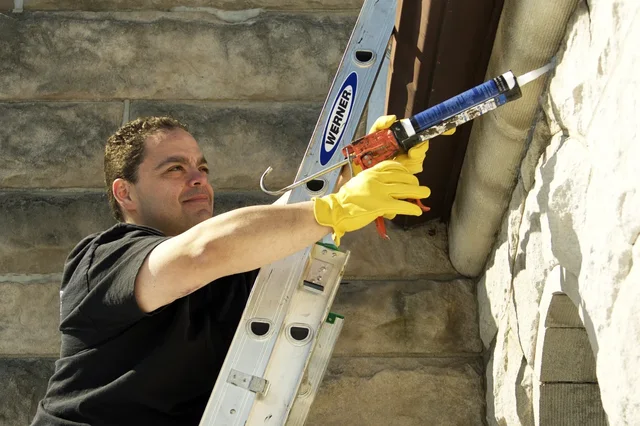
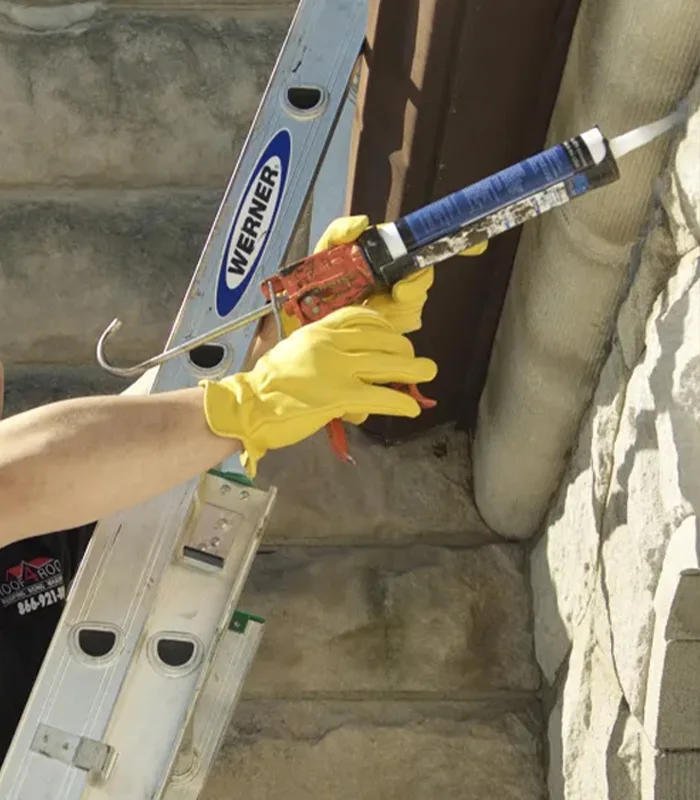
Roof4Roof owner on a ladder caulking the joint between a stone wall and a window frame
The joint between stone and frame, sealed with the right sealant for both
Waterproofing

Keep the water out, let the wall breathe

Masonry waterproofing is not a coat of something shiny. The wrong sealer traps water inside the brick and makes spalling worse. We waterproof from the top down, in the order the water travels.

  1. 01
    Caps, copings and flashingsChimney crowns, parapet copings and through-wall flashings rebuilt first; most masonry water enters from the top, not the face.
  2. 02
    Joints and sealantFailed caulk at windows, doors, expansion joints and dissimilar materials cut out and replaced with a sealant rated for masonry movement.
  3. 03
    Breathable sealers and coatingsSiloxane or silane penetrating sealers on brick and stone that repel water and let vapour out; elastomeric coatings on block, parapets and stucco.
  4. 04
    Foundations and basementsGrading and gutters corrected, foundation walls parged and coated below grade, drainage board and membrane where we can excavate, interior sealing where we cannot.
Power washing and exterior waterproofing packages

Gold, Platinum and Diamond

Cleaning as an early damage identification system, then repairs, sealing or a complete new surface, depending on what the wall needs.

Gold

Extending the life of the exterior while preventing moisture intrusion

  • Cleaning: Professional power washing to remove organic growth and debris
  • Leak mitigation: Obvious voids and damaged areas that let water in identified and sealed

Best for: Immediate maintenance: stop active leaks and clean the building's exterior

Platinum

Additional protection against weathering and long-term moisture

  • Structural repairs: More extensive and permanent masonry and surface repairs
  • Protective sealant: A premium clear or colour-based waterproofing sealer

Best for: Buildings that need lasting protection against weathering

Diamond

Total aesthetic renovation and maximum-grade moisture shielding

  • Surface transformation: New synthetic or traditional stucco
  • Encapsulation: A complete overcoat of the existing brick, stone or block, with optional insulating board, for a modern look and ultimate durability

Best for: A full exterior renovation with the strongest moisture defence

No prices on this page on purpose: every package is scoped and priced after the inspection, and the exact terms go into your written proposal. Bring any other written proposal: same scope, same warranty, we beat it.

Request a Free Estimate →
Why Roof4Roof

Pointing done by people who also fix the roof above it

Water in a brick wall usually started at a cap, a flashing or a gutter. We do all three, which is why our repointing stays repointed. Four things we do on every masonry job that most crews do not:

  • Mortar matched on a sample firstColour, sand and strength tested against the existing joint before the first bag is mixed, so the repair disappears and the wall moves as one.
  • Joints ground, not smearedFailed mortar cut out to at least three-quarters of an inch; "tuck pointing" that butters new mortar over old is a two-year repair.
  • Breathable products onlyNo film-forming sealers on brick or stone, ever. If a wall is wet inside we dry it before we seal it.
  • The owners' direct line on every documentIssues answered within 48 hours, most within 24. The owners' contact details are printed on every proposal and invoice.

And a share of this job funds a roof for a family in need, through our One4One program.

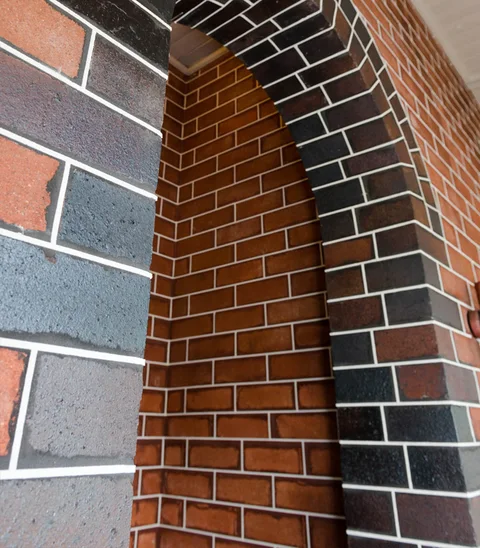
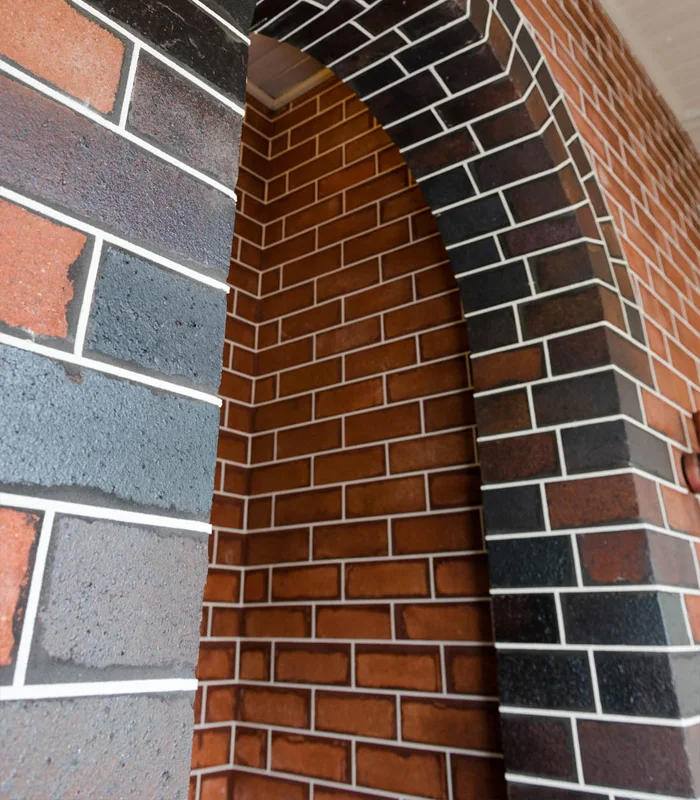
A restored brick archway with freshly tooled mortar joints
Inspect, then decide

How a pointing or waterproofing job runs with us

Step 01

Inspect

Joints, brick faces, lintels, sills, caps and flashings checked, water tested where it leaks, the basement looked at. Free, with a written report and photos.

01
Step 02

Propose

Which elevations and how many square feet to point, which brick to replace, the mortar, the sealer, the caps and flashings, the warranty and the price, in writing.

02
Step 03

Build

Dust controlled, windows and landscaping covered, joints ground and repointed, brick replaced, caps and flashings rebuilt, then sealant and sealer once the wall has dried.

03
Step 04

Protect

Walkthrough, closeout photos, workmanship warranty in writing, and a note of when the sealer and the sealant are due again.

04
Cost & financing

What tuck pointing and waterproofing cost in New Jersey

Square footage, how deep the joints have to be cut, how many bricks need replacing, the height and whether scaffolding or a lift is needed decide the price. These are honest ranges from our own jobs; your written estimate is free and exact.

Tuck pointing
Typically $15–$30 per square foot; small areas and chimneys from $900; whole elevations quoted by the square
Brick replacement
Priced per unit on top of pointing; matched or reclaimed brick sourced for the wall
Sealing and caulking
Breathable sealer per square foot; sealant per linear foot at windows and joints
Foundation waterproofing
Exterior membrane and drainage quoted per linear foot after inspection; interior sealing from $1,500
100% financing

Pay for the wall the way that suits you

Residential financing through Service Finance Company for qualified applicants, including same-as-cash and fixed-rate plans. For associations and commercial owners we phase the work by elevation and provide capital-plan budgets.

Financing options →

Water in the basement after a storm? We document it for your insurer where the policy covers it.

FAQ

Pointing and waterproofing questions, answered straight

What New Jersey owners ask us before they sign.

Have a question not listed here? Call (201) 267-3000 or request an estimate.

01What is tuck pointing, and why does it matter?+

Renewing the mortar between bricks or stones: the failed joint is cut out and refilled with new mortar matched to the wall. It restores the wall's strength and keeps water out of it, which is what prevents spalling, leaks and the expensive rebuilds that follow.

02How do I know my wall needs pointing?+

Mortar that crumbles when you touch it, joints recessed more than a quarter inch, gaps you can slide a coin into, white efflorescence, water stains on interior walls, or brick faces popping off. A free inspection confirms it and tells you how much of the wall is affected.

03Does the whole house need to be done?+

Rarely. Weather hits the south and west elevations, chimneys and parapets hardest; those often need pointing while the sheltered walls are fine. We quote by elevation and tell you which can wait.

04What is waterproofing, and how does it protect my home?+

A set of barriers that stop water getting into masonry and foundations: rebuilt caps and flashings, new sealant at joints, breathable penetrating sealers on the wall, coatings on block and parapets, and membranes and drainage at the foundation. Done in that order, from the top down.

05Will sealing my brick stop it spalling?+

Only a breathable sealer will help, and only after the joints and caps are fixed. A film-forming sealer on a wet wall traps water inside the brick and makes spalling worse; it is the most common thing we have to undo.

06Can tuck pointing and waterproofing prevent mould and mildew?+

Yes. Water intrusion through masonry is a leading cause of mould in basements and behind interior walls; a dry wall cannot grow it. We treat the wall and fix the drainage that was feeding it.

07How long does repointing last?+

Done with the right mortar and the right depth, 25 to 50 years on modern brick and longer on soft old brick with lime mortar. Smeared-over "pointing" lasts a season or two.

08Where do you work?+

Homes across Northern and Central New Jersey, including Bergen, Hudson, Essex, Passaic, Morris, Union, Middlesex, Somerset, Hunterdon and Sussex counties. Commercial and multifamily masonry across the whole of New Jersey.

Reviews

From people whose brick we brought back

Read all Google reviews →
★★★★★

"They repointed my brick chimney and repaired stucco trim in Wyckoff using breathable mortar and elastomeric coating, and power washed the exterior. The crisp finish looks brand-new."

Carlos Andrés QuicenoPosted on Google
★★★★★

"I had the roof and chimney replaced past spring by Roof4Roof. From start to finish it was smooth. Everyone was courteous. And the work itself was amazing. I also like their lifetime warranty."

Min Sun ParkPosted on Google
★★★★★

"Work was done on time as promised. The staff was very polite and professional. Work area was left very clean and neat. I had no problems with this project, they handled everything."

Candido NunezPosted on Google
One4One

A share of every job funds a roof, a repair or a home for a family in need, in New Jersey and abroad: $1.5M+ donated and 1,300+ families helped since 2010.

How One4One works →
Free estimate

Find out which walls need pointing and which can wait

An inspection of every joint, cap and flashing, a written report with photos, and a proposal by elevation with the mortar, the sealer and the price spelled out.

Request a Free Estimate

A real person calls you back within 24 hours.

Your information stays private. We never share your details.