Attic insulation, radiant barrier, air sealing and ventilation

The attic is where the heating bill goes, and where the roof's problems start

Most New Jersey attics have half the insulation they should, no air sealing and ventilation that was blocked years ago. The result is a cold house in January, a hot upstairs in July, ice dams, condensation and shingles that age early. We insulate, air-seal, ventilate and install radiant barriers as the roofers who see the attic from both sides, so the roof and the attic work together.

  • R-49What a New Jersey attic should reach
  • Air-sealedBefore the insulation goes in
  • VentedSoffit and ridge balanced
  • Thermal imagingHeat loss found, not guessed
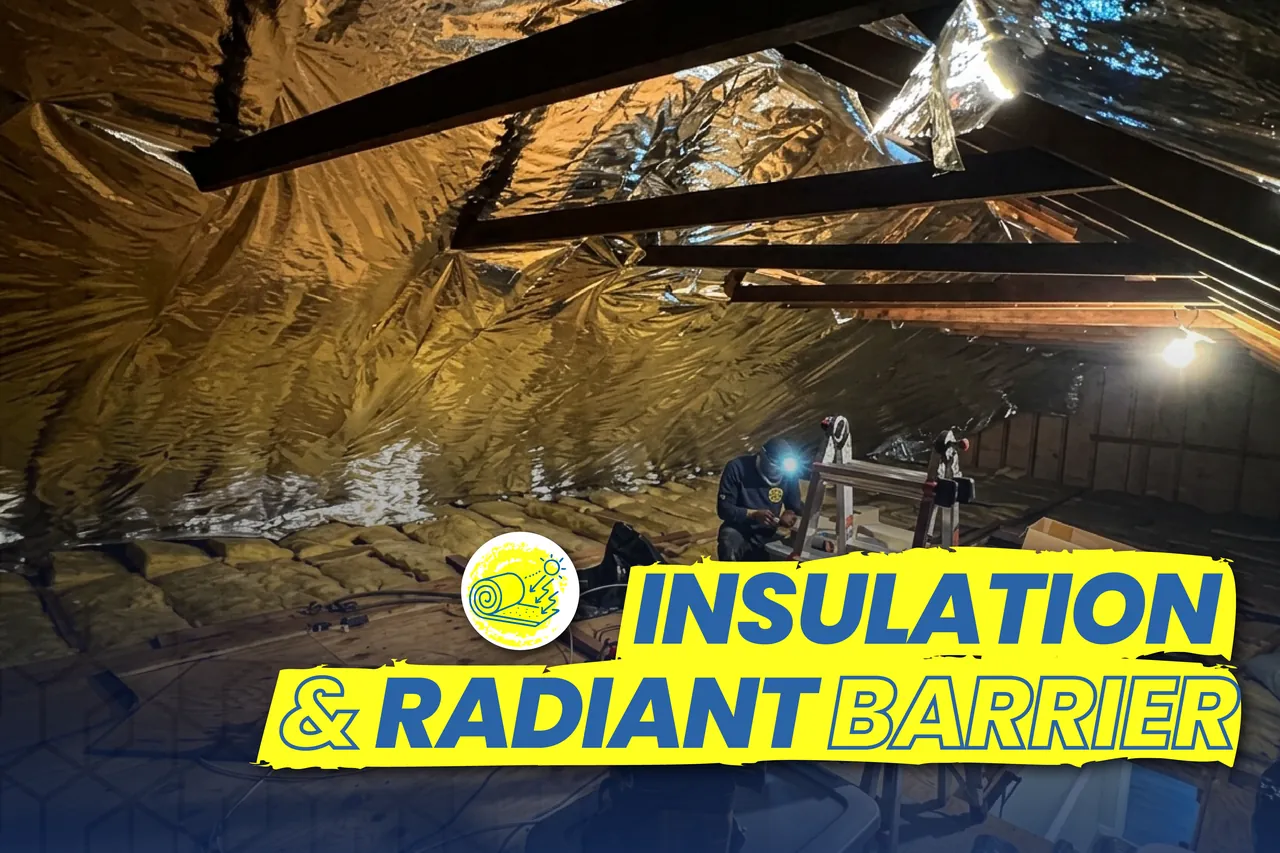
Insulation & Radiant Barrier: Roof4Roof video cover showing foil radiant barrier installed across attic rafters
Watch: attic insulation and radiant barrier installation in New Jersey, for cooler upstairs rooms and lower energy bills (2 min)
  • Exterior Services Since 1990
  • 30M+ sq ft of Roofing & Exteriors Installed
  • 25,000+ Satisfied Clients
  • A Legacy of Giving: $1.5M+ Donated
Signs

What the symptom usually means, and what we do about it

Six things we see most in New Jersey attics, and the honest answer for each.

01

Ice dams and icicles every winter

Usually: heat leaking into the attic melts the snow, which refreezes at the cold eave. An insulation and air-sealing problem, not a gutter problem.

We do: air-seal, insulate to depth, open the soffit intake with baffles, vent the ridge.
02

Upstairs rooms hot in summer, cold in winter

Usually: thin insulation and a roof deck radiating heat down onto it.

We do: insulation to R-49, a radiant barrier under the rafters, ventilation balanced.

03

Frost or dripping on the underside of the roof

Usually: warm, moist house air getting into a cold, unventilated attic; bathroom fans venting into it.

We do: seal the ceiling, duct the fans outside, restore the ventilation, replace any mouldy sheathing.

04

Insulation that is flat, grey, or below the joists

Usually: decades of settling, or insulation that got wet from a roof leak.

We do: remove what is wet or contaminated, top up or replace to the right depth.

05

High bills with a new furnace or air conditioner

Usually: conditioned air going straight through the ceiling and ducts in a 140-degree attic.

We do: air-seal the ceiling plane, insulate the ducts and the attic, radiant barrier over the ducts.

06

Animal damage, droppings, odour

Usually: squirrels or raccoons in through the soffit, nesting in the insulation.

We do: close the entry with the soffit repair, remove and replace the contaminated insulation, sanitize.

  • Attic insulation repairs and replacements
  • Radiant barrier installation and sealing
  • Moisture and mould damage remediation
  • Ventilation and air sealing improvements
  • Blown-in and batt insulation top-ups
  • Energy efficiency and heat loss inspections
  • Roof deck and attic temperature control upgrades
  • Thermal imaging evaluations
  • Bathroom fan ducting and attic hatch sealing
  • Contaminated insulation removal
Insulation types

Which insulation for which attic

New Jersey's climate zone calls for R-49 in the attic floor. How you get there depends on the attic, the budget and what is already up there.

Blown-in cellulose or fiberglass attic floor

Best for: topping up or replacing insulation on an open attic floor; the most cost-effective R-value.

Why: fills around joists, wiring and odd shapes with no gaps; cellulose is dense and treated against fire and pests; fiberglass does not settle.

R-49 at 14–18 inches

Fiberglass or mineral-wool batts accessible framing

Best for: knee walls, sloped ceilings, rim joists and attics that are also storage.

Why: fitted between the framing, faced or unfaced as the vapour control needs; mineral wool adds fire and sound resistance.

R-30 to R-38 per layer

Spray foam roof deck, cathedral ceilings

Best for: finished attics, cathedral ceilings and attics with ductwork, where the roof deck becomes the insulated boundary.

Why: closed-cell foam insulates and air-seals in one pass with the highest R per inch; brings the attic inside the envelope.

R-6.5 per inch, closed cell

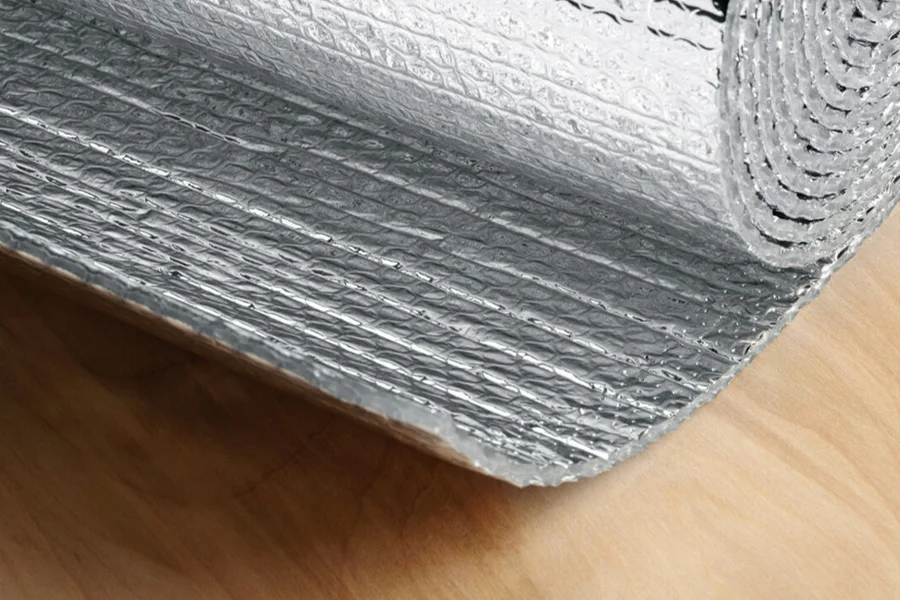
Radiant barrier reflective foil

Best for: summer heat: attics with ducts in them, hot upstairs rooms, dark roofs.

Why: foil stapled under the rafters reflects most of the radiant heat from the roof deck, so the attic and the ducts run cooler. It adds no R-value and does not replace insulation.

Cuts attic temperature noticeably

Air sealing before anything else

Best for: every attic. Insulation does not stop air; sealing does.

Why: foam and caulk at top plates, penetrations, chases and the hatch; fire-rated sealant at chimneys and flues; covers on recessed lights. Often the biggest single saving.

Done first, every time

Ventilation intake and exhaust

Best for: every vented attic. Insulation without airflow means moisture.

Why: baffles at every rafter bay keep the soffit intake open; ridge or roof vents give the air somewhere to go; bathroom and dryer fans ducted outside.

1 sq ft per 300 sq ft of attic
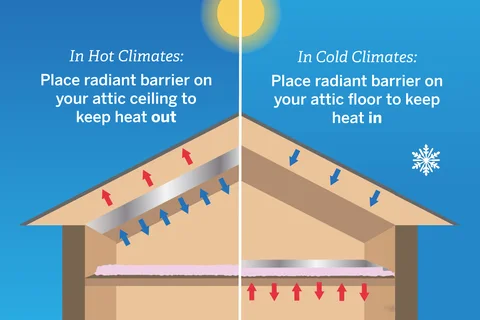
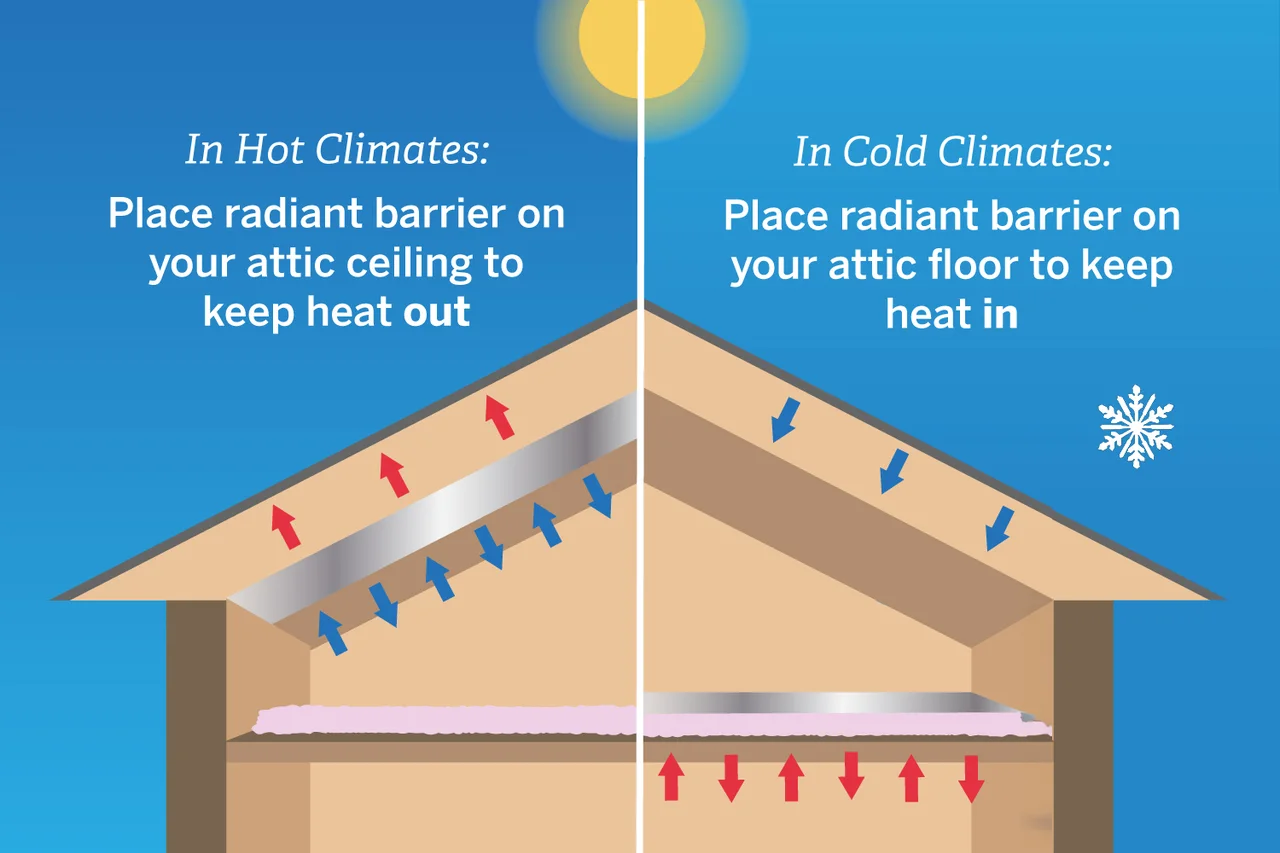
Diagram: radiant barrier on the attic ceiling keeps heat out in hot climates; on the attic floor it keeps heat in
Where the barrier goes depends on which way the heat is travelling
Radiant barrier

How a radiant barrier works, and what it does not do

On a July afternoon a dark roof deck reaches 150 degrees and radiates that heat down onto the insulation and the ducts. A radiant barrier reflects most of it back out before it gets there.

  1. 01
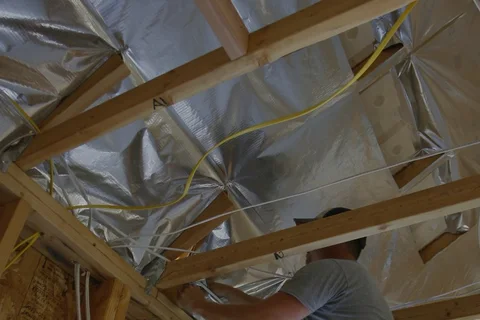
    Where it goesIn New Jersey, stapled to the underside of the rafters with an air gap, so the attic stays cooler in summer. Laid on the attic floor it would trap moisture; we do not do that here.
  2. 02
    What it doesCuts attic temperature and the load on ductwork and air conditioning in summer; a modest help with heat loss in winter. Most useful in attics with ducts and in rooms under a dark roof.
  3. 03
    What it does not doIt adds no R-value. It is a companion to insulation and air sealing, not a substitute, and we will tell you if your attic is better served by insulation alone.
  4. 04
    With the roofThe cheapest time for a radiant barrier and roof-deck ventilation is during a roof replacement; we offer both in the same proposal.
Ventilation, insulation and radiant barrier packages

Gold, Platinum and Diamond

Airflow first, then heat reflection, then fresh insulation: the three layers of a cool, dry, efficient attic.

Gold

Optimising attic temperatures and improving energy efficiency

  • Active ventilation: Professional installation of high-performance attic roof fans
  • Passive systems: Ventilation integrated for consistent airflow through the attic

Best for: Poor air circulation and attic hot spots

Platinum

A thermal envelope that keeps the attic cooler through the summer peak

  • Radiant barrier: High-efficiency radiant barrier that reflects up to 97% of radiant heat
  • Heat shield: A thermal envelope that keeps the attic significantly cooler in peak summer months

Best for: Properties that want to cut the load on the HVAC system and lower cooling costs

Diamond

Total performance: airflow, heat reflection and modern insulation combined

  • Insulation replacement: Old, degraded or contaminated attic insulation removed and fresh high-R-value material installed
  • Total performance: The ultimate climate-control solution for the attic

Best for: Older properties with outdated insulation, or owners who want maximum efficiency and indoor air quality

No prices on this page on purpose: every package is scoped and priced after the inspection, and the exact terms go into your written proposal. Bring any other written proposal: same scope, same warranty, we beat it.

Request a Free Estimate →
Why Roof4Roof

Insulation installed by people who see the attic from above

An insulation company fills the attic and leaves. We know what blocked soffit vents, an unducted bathroom fan and a wet corner of sheathing do to a roof, because we replace those roofs. Four things we do on every insulation job that most crews do not:

  • Air-seal first, then insulateThe holes in the ceiling are sealed before the insulation covers them, which is the only time they can be.
  • Ventilation kept openBaffles at every rafter bay so the new insulation cannot block the soffit; exhaust checked at the ridge. Insulation that buries the vents causes the ice dams it was meant to stop.
  • Moisture and leaks fixed firstWet insulation, mouldy sheathing and a roof leak are dealt with before anything new goes in, with photos.
  • The owners' direct line on every documentIssues answered within 48 hours, most within 24. The owners' contact details are printed on every proposal and invoice.

And a share of this job funds a roof for a family in need, through our One4One program.

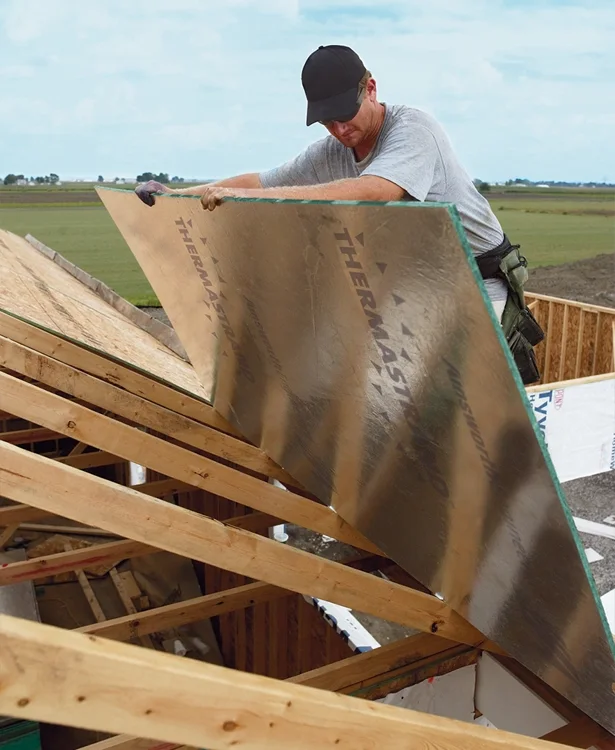
A worker carrying a foil-faced radiant barrier sheathing panel onto a roof frame
Inspect, then decide

How an insulation job runs with us

Step 01

Inspect

Attic, roof deck, insulation depth, air leaks, ventilation and moisture checked, with thermal imaging where it helps. Free, with a written report and photos.

01
Step 02

Propose

Air sealing, the insulation type and target R-value, radiant barrier if it earns its place, ventilation fixes, the warranty and the price, in writing.

02
Step 03

Install

Old or wet insulation out where needed, ceiling sealed, baffles in, insulation to depth, barrier stapled, fans ducted. Most attics in a day.

03
Step 04

Verify

Depth markers and photos of the finished attic, the hatch insulated and weatherstripped, warranties in writing and the paperwork for any utility rebate.

04
Cost & rebates

What attic insulation costs in New Jersey

Attic area, how much old insulation has to come out, the type and depth, and how much sealing and ventilation work is involved decide the price. These are honest ranges from our own jobs; your written estimate is free and exact.

Air sealing and blown-in top-up to R-49
Most attics $1,800–$4,500
Removal and full replacement
$3,500–$8,000 depending on area and contamination
Radiant barrier
$1–$2 per square foot of roof deck installed
Spray foam at the roof deck
Priced per square foot by thickness; quoted after inspection
Rebates and financing

Insulation often pays for part of itself

Attic insulation and air sealing may qualify for New Jersey utility energy-efficiency programmes and the federal energy-efficiency tax credit; we provide the documentation. Residential financing through Service Finance Company for qualified applicants.

Financing options →

Rebate programmes change; we confirm what applies when we quote.

FAQ

Insulation questions, answered straight

What New Jersey homeowners ask us before they sign.

Have a question not listed here? Call (201) 267-3000 or request an estimate.

01How much insulation should a New Jersey attic have?+

R-49, which is about 14 to 18 inches of blown-in insulation depending on the material. If you can see the tops of the joists, you have roughly a third of that.

02Does a radiant barrier replace insulation?+

No. It reflects summer heat off the roof deck and keeps the attic cooler; it adds no R-value. It belongs under the rafters, above insulation that is already adequate, and it earns its place mainly in attics with ductwork or under dark roofs.

03Why air-seal before insulating?+

Because insulation slows heat but does not stop air, and the warm, moist air leaking through the ceiling carries most of the heat and all of the moisture. The holes are only reachable before the insulation covers them.

04Will more insulation cause ice dams?+

Only if it blocks the soffit vents. Done with baffles and balanced ventilation, more insulation is what prevents ice dams: the attic stays cold, the snow stays frozen.

05Can you insulate a finished attic or cathedral ceiling?+

Yes, with spray foam at the roof deck or dense-pack in the rafter bays with proper venting, which brings the attic inside the insulated envelope. It is also the right time to add a radiant barrier and to fix the roof-deck ventilation.

06Should old insulation be removed?+

Only when it is wet, mouldy, contaminated by animals or so compressed it is doing nothing. Dry, clean insulation is topped up over, after air sealing.

07Where do you work?+

Homes across Northern and Central New Jersey, including Bergen, Hudson, Essex, Passaic, Morris, Union, Middlesex, Somerset, Hunterdon and Sussex counties.

Reviews

From people whose homes we made comfortable

Read all Google reviews →
★★★★★

"Roof4Roof was very professional, the employees were courteous and respectful with my property. The job was completed on time. All debris was cleaned and removed from the job site. We would not hesitate to recommend Roof4Roof."

Gregory St. LucePosted on Google
★★★★★

"Good quality and good service at a great price. Special thanks go to John, who provided a lot of useful suggestions and made sure the workers did a good job."

Charles LiPosted on Google
★★★★★

"Work was done on time as promised. The staff was very polite and professional. Work area was left very clean and neat. I had no problems with this project, they handled everything."

Candido NunezPosted on Google
One4One

A share of every job funds a roof, a repair or a home for a family in need, in New Jersey and abroad: $1.5M+ donated and 1,300+ families helped since 2010.

How One4One works →
Free estimate

Find out where the heat is going

An attic inspection with thermal imaging where it helps, a written report with photos, and a proposal with the sealing, the insulation, the ventilation and the price spelled out.

Request a Free Estimate

A real person calls you back within 24 hours.

Your information stays private. We never share your details.