The “Polar Vortex” Freeze: Safeguarding Your North Jersey Roof Against the 2026 Arctic Blast

As of February 2026, Northern New Jersey is experiencing one of the most volatile winter patterns in recent memory. A statewide Extreme Cold Warning has been issued as an arctic front sweeps across the region. Forecasts warn of temperatures plunging into the low single digits, wind chills reaching -25°F, and gusts exceeding 50 mph.
This is not just another cold snap.
For property owners across Hudson, Bergen, Essex, Passaic, Morris, Union, and surrounding counties, these conditions represent a direct structural threat. When wind, freeze cycles, and trapped moisture combine, even minor roofing vulnerabilities can escalate into catastrophic failures.
If you manage commercial facilities or own a home in North Jersey, understanding what happens during a polar vortex is the first step toward preventing serious damage.
The Science Behind “Expansion Stress”
Snow alone is rarely the biggest issue. The real danger is the freeze-thaw cycle.
Here is how it works:
Daytime sunlight melts the surface layer of snow.
Meltwater flows into seams, nail penetrations, flashing edges, and minor cracks.
Nighttime temperatures drop sharply.
The trapped water refreezes and expands by approximately 9 percent.
That expansion forces materials apart.
Water acts like a mechanical wedge. What was once a harmless hairline crack becomes a widened entry point for future leaks.
This expansion stress is the leading cause of sudden interior water intrusion when temperatures rise again. Many homeowners do not discover the damage until ceilings stain or attic insulation becomes saturated.

Commercial Roofing Alert: Flat Roof Vulnerabilities
Flat roofing systems across Whippany, Jersey City, Newark, and industrial corridors are particularly at risk.
When drainage systems freeze:
Scuppers clog with ice
Internal drains become blocked
Meltwater cannot escape
“Ponding ice” develops
The combined weight of standing ice and high wind uplift creates extreme pressure on the roof membrane. Seam separation, flashing failure, and structural sagging can occur quickly.
If your building operates under a TPO, EPDM, or modified bitumen system, now is the time to assess conditions.
For facilities with flat systems, explore:
👉 Flat Roof Services in NJ
For additional long-term protection, reflective and reinforced systems can dramatically improve winter resilience:
👉 Roof Coating Systems NJ
Preventative inspections during extreme cold can prevent thousands in structural repairs later.
Residential Roofing: Ice Dams and Shingle Damage
For homeowners across Montclair, Paramus, Essex County, and Bergen County, ice dams are the primary threat.
When attic insulation is insufficient:
Heat escapes upward
Snow melts from underneath
Water flows downward
It refreezes at the cold eaves
Ice dams form
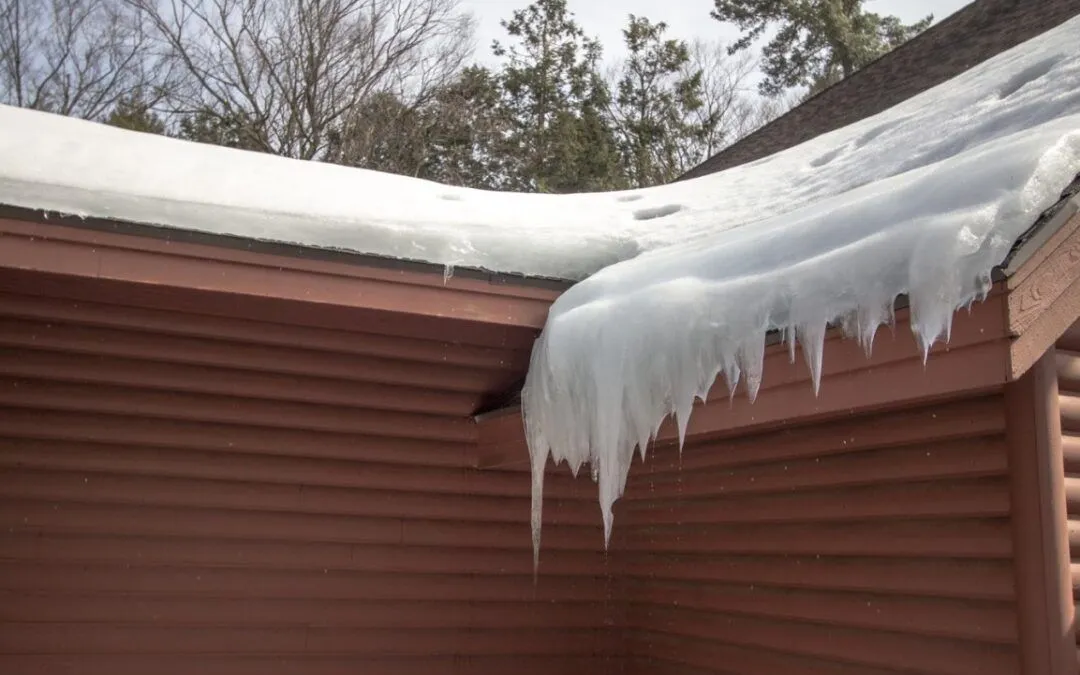
Once an ice dam develops, liquid water is forced upward beneath shingles. This is how interior ceiling leaks begin.
Asphalt shingles also become brittle in sub-zero temperatures. With 50 mph wind gusts, lifting and cracking are common.
If your home has architectural shingles, aging underlayment, or exposed flashing, professional evaluation is strongly recommended.
Learn more about:
👉 Shingle Roof Services NJ
Historic and High-End Roof Systems: Slate & Tile Risks
Slate and tile roofing systems are durable but not immune to arctic stress.
Rapid freeze expansion can:
Crack individual slate tiles
Shift mortar joints
Loosen ridge caps
Damage copper flashing
These systems require experienced handling and inspection techniques.
If your property features slate or tile construction:
👉 Slate & Tile Roof Services NJ
Why Roof Inspections Matter Before the Thaw
The most dangerous moment is not during the freeze.
It is during the thaw.
When accumulated ice begins melting rapidly, previously widened cracks become active leak channels. Water intrusion spreads quickly into insulation, drywall, electrical systems, and structural decking.
Routine winter inspections allow professionals to identify:
Soft spots in decking
Compromised seams
Ice shield failures
Drainage obstructions
Ventilation imbalances
If you have not scheduled a winter inspection, this is the time.
👉 Roof Inspections, Maintenance Contracts & Emergency Repairs
Proactive inspections are significantly more cost-effective than reactive emergency repairs.
Choosing the Right Protection for New Installations
If you are considering a new roof installation in North Jersey, winter performance should be a primary design factor.
Key components include:
High-performance ice and water shield membranes
Proper attic ventilation systems
Ridge and soffit balance
Reinforced flashing details
Advanced underlayment materials
A properly designed roofing system is built specifically for North Jersey’s freeze-thaw patterns.
A Roofing Company With a Mission Beyond Roofing
At Roof4Roof, protecting properties during extreme weather is part of a broader mission.
Every emergency repair and new installation directly supports charitable contributions in honor of Debbie Anania. Customer trust enables ongoing donations to organizations including:
The Trevor Project
Hyacinth Foundation
Wynona’s House
When you hire Roof4Roof, you are not only protecting your structure. You are contributing to real impact within the New Jersey community.
The Bottom Line: Do Not Wait for the Thaw
The 2026 Arctic Blast is not theoretical. The freeze is active now.
Wind, ice expansion, and drainage failure can turn minor vulnerabilities into major interior damage within days.
Whether you manage a commercial facility or own a residential property in North Jersey, an arctic-ready roof inspection is the safest step you can take.
📞 Call 201.267.3000
Schedule your emergency inspection today and secure your roof before the thaw exposes hidden damage.
Your roof protects everything underneath it. In this weather, there is no room for delay.
related articles